

Our Organizations

Avoiding Pressure Ulcers

Image Placeholder

Caregivers need to keep a close eye on elderly patients to avoid pressure ulcers from occurring. Pressure ulcers (also called decubiti, or bedsores) are blisters or breaks in the skin caused when the body’s weight presses blood out of a specific area. Pressure ulcers are commonly found in bedridden patients or people with mobility challenges who do not get up to move frequently enough. According to the National Pressure Ulcer Advisory Panel estimates that 2.5 million American develop pressure ulcers each year.

The most common areas for sores are the bony areas—tail bone, hips, heels, and elbows. Damage can range from a change in color in unbroken skin to deep wounds that extend down to the muscle or even bone. How much time it takes a pressure sore to heal depends on how advanced it is. Prevention is key.

The skin breakdown starts from the inside and works up to the surface. Damage can happen in as little as 15 minutes. For people with fair skin, the skin tone may change to dark purple or red and does not turn pale under fingertip pressure. For people with dark skin, this area may become darker than normal.
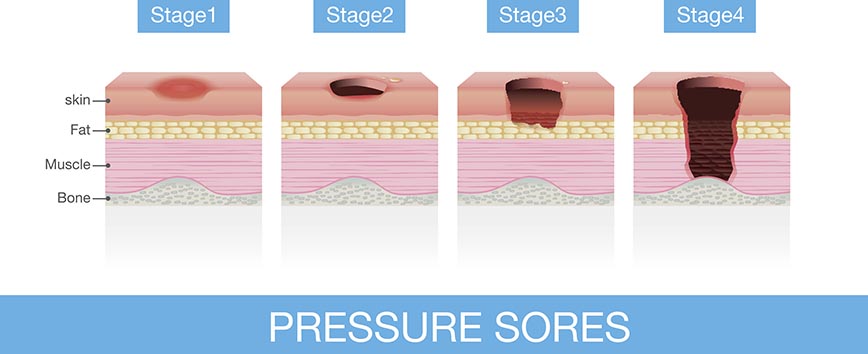
Stages of Pressure ulcers

Preventing Pressure Ulcers

This is one case where an ounce of prevention really is worth a pound of cure. Pressure sores that are not treated can lead to hospitalization and might require skin grafts.

  • Check the skin daily. (Bath time is ideal.)
  • Provide a well-balanced diet with enough vitamin C, zinc, and protein.
  • Keep skin dry and clean. Urine left on the skin can cause sores and infection.
  • Use a barrier ointment to protect the skin.
  • Keep clothing loose.
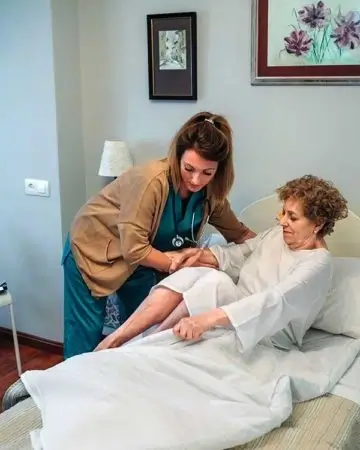
  • If a patient is bedridden, he or she should be turned at least every 2 hours. Alter positions as well, instead of simply rolling from side to side.
  • Smooth wrinkles out of sheets. Excessive rubbing of the sheet against skin can cause a sore.
  • Lightly tape foam to bony sections of the body using paper medical tape. (Strong adhesive will likely damage and even tear thin skin.)
  • Use flannel or all-cotton sheets to absorb moisture.
  • Avoid using a plastic mattress covers or Chux pads if they cause the patient to sweat.
  • Provide exercise as much as possible.

elit. Ut elit tellus, luctus nec ullamcorper mattis, pulvinar dapibus leo.

Treating Pressure Ulcers

If you see bedsores in your daily checking of the skin, alert the patient’s healthcare team. The patient will need to be closely observed to ensure the sore is not worsening. Reduce the chance of further infection by wearing disposable gloves when you provide care.

  • Do not let the person lie on pressure sores. As much as possible, position his or her bony parts so there is little or no pressure weight on them. You might have to get creative with pillows or a 1-inch foam pad to support the body.
  • Follow the healthcare team’s treatment plan in applying medication to sores and bandaging the areas to protect them while they heal.

Family Caregiver Education Series

Hope’s Family Caregiver Education Series is available to any member of the community who is currently engaging as a caregiver to a loved one living with a terminal diagnosis or a disabling chronic condition, regardless of whether your loved one is a Hope Hospice patient. The free 12-class series covers a variety of topics and provides training, education, support, and resources relevant to family caregivers. Plus, much like a support group, these classes provide an opportunity to connect with others who have shared experiences.

LEARN MORE

Related Content

Cards and promos for other featured content.

Blog

How Alzheimer’s Disease Affects Communication

Memory loss is one of the widely known symptoms of Alzheimer’s disease, but many other skills and abilities become impaired as well. Persons living with dementia experience changes in the brain’s temporal lobe that affect their ability to process language. Even in the disease’s early stages, caregivers may notice a decline in formal language (vocabulary, comprehension, and speech production), which all humans rely upon to communicate verbally. Symptoms include word loss, confusion during the conversation, not being able to follow a storyline, and decreased speech.