
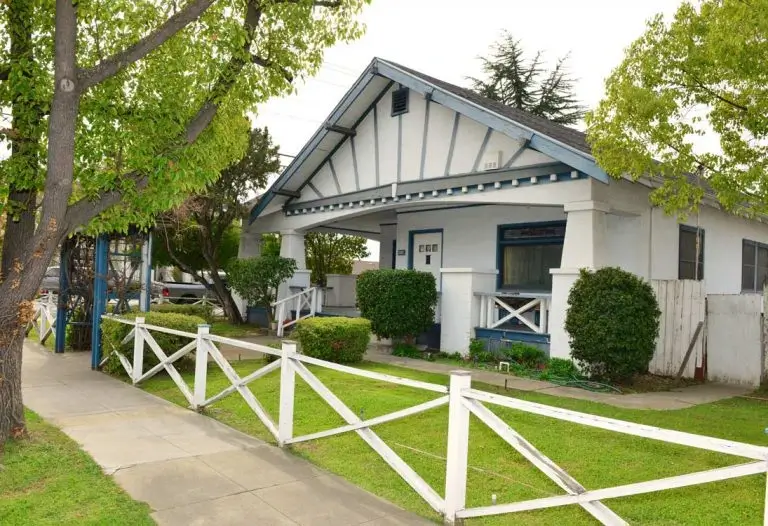
Hope Hospice recently received a substantial gift from the Fankhauser Family Trust that includes a residence and property near downtown Livermore. A generous supporter of many charities and organizations over the years, Livermore resident Henrietta “Henri” Fankhauser felt strongly enough about hospice care to leave this significant contribution to Hope. Her brother had received hospice care and she was familiar with Hope Hospice. As a way to memorialize her brother, she named Hope Hospice in her will in the early 2000s. The gift was finalized early this year after Henri passed away in November 2017 at age 96.
The property includes a Craftsman-style house, built in 1910, and the Blue Door antique store next door. The house is located at 309 North “L” Street in Livermore. Henri and her husband Chester bought the property in 1973. Chester, who worked at Lawrence Livermore National Laboratory, died in 1992. Both were active in community organizations in Livermore and were avid antique collectors.
“This is a very special gift,” says Bob Boehm, Hope Hospice CEO. “We believe the best way to use this donation is to have it serve our community. In the upcoming months, we will form the “Henri’s House Committee” made up of local individuals to seek advice and ideas to help us determine the best use of this house in ways that are consistent with our mission,” he adds. For more information about the committee, contact Hope Hospice Director of Development Jennifer Pettley, at (925) 829-8770.
Hope Hospice is a community-led, non-profit hospice agency that was conceived in 1978 by a group of concerned citizens in the Pleasanton-Livermore area. They wanted to help community members with terminal illnesses spend their final days at home, surrounded by loved ones. “That spirit lives on today,” notes Boehm. “We continue to be led by a volunteer board of local individuals and are proud to remain a non-profit agency,” he adds. “Gifts of all kinds allow us to provide exceptional end-of-life care when it is needed the most and often continue giving into the future.”